
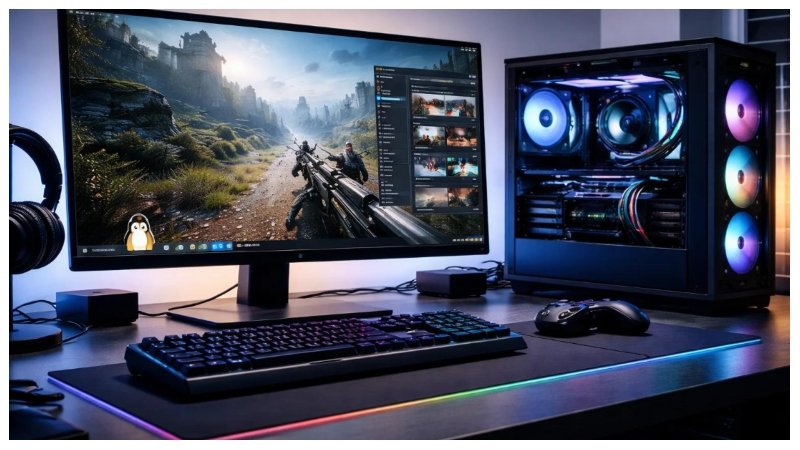
Linux gaming offers more options than many players expect, but choosing the right game still requires some research. Compatibility tools, graphics drivers, operating system updates, and multiplayer restrictions can all affect the experience.
PBLinuxTech Gaming News by PlugBoxLinux is a search phrase associated with Linux gaming information. Readers interested in this topic can use it as a starting point for exploring gaming updates, Steam compatibility, performance improvements, and practical troubleshooting. However, the availability of a specific game or feature should always be checked against reliable sources.
This guide explains what Linux gamers should follow, how to verify compatibility, and which steps can help resolve common gaming problems.
What Is PBLinuxTech Gaming News by PlugBoxLinux?
The keyword combines the names PBLinuxTech and PlugBoxLinux with an interest in gaming news and Linux technology.
Search results contain pages using this phrase, but the available evidence does not independently establish a formal partnership between the two names. Readers should therefore evaluate the information in each article rather than assume that every claim represents an official announcement.
For Linux gamers, the most useful coverage focuses on developments that affect real gameplay, including:
-
Linux game releases and software updates.
-
Steam Play and Proton compatibility changes.
-
Graphics driver improvements and bug fixes.
-
Multiplayer support and anti-cheat restrictions.
-
Performance troubleshooting and hardware requirements.
-
Steam Deck and other Linux-based gaming devices.
Useful gaming coverage should explain what changed, which players may be affected, and where to verify the original announcement.
Why Linux Gaming News Matters
Gaming on Linux involves more than installing a game and pressing Play. Some titles offer native Linux versions, while others depend on compatibility software to run their Windows versions.
A game that launches successfully may still have problems with controllers, graphics, online features, or performance. Updates to the game or its compatibility layer can also change the experience.
Following reliable Linux gaming news helps players make better decisions in three important areas.
1. Game compatibility
Before buying or downloading a game, check whether it supports Linux directly or works through a compatibility tool.
The ProtonDB compatibility database collects reports from players who test Steam games on Linux. These reports can reveal useful details that a basic compatibility label might not explain.
Look for recent reports, similar hardware, the distribution being used, and any workarounds mentioned by other players.
2. Software and driver updates
Operating system updates, graphics drivers, and compatibility tools can affect how games launch and perform.
An update may fix a problem, improve support for particular hardware, or introduce a new issue. That is why good gaming news should identify the relevant software version and link to official release notes whenever possible.
Players should avoid assuming that every new driver or compatibility release will improve every game.
3. Gaming performance
Performance information helps players understand whether a problem comes from hardware limitations, graphics settings, a driver issue, or the game itself.
Reliable guides should explain their test conditions instead of promising universal frame-rate improvements. CPU, GPU, RAM, resolution, driver versions, and background applications can all influence the result.
Understanding Steam and Proton on Linux

According to Valve’s Proton documentation, Proton enables many Windows games to run on Linux without requiring developers to create separate Linux versions.
It uses Wine and other components to translate or implement features that Windows games need. However, compatibility varies between titles.
Native Linux games versus Proton games
| Feature | Native Linux game | Windows game through Proton |
|---|---|---|
| Linux support | Built for Linux | Runs through a compatibility layer |
| Setup | Usually straightforward if dependencies are available | May require a compatible Proton version |
| Compatibility | Depends on the game and its Linux build | Depends on the game, Proton, drivers, and other components |
| Troubleshooting | May involve Linux-specific bugs | May also involve Windows compatibility issues |
Neither option guarantees a flawless experience. A well-maintained native version can work very well, while a Windows game running through Proton may also perform successfully.
How to enable Proton in Steam
If a Windows game does not offer a native Linux version, try these steps:
-
Open Steam and select Settings.
-
Find the Compatibility or Steam Play settings. The exact menu layout may vary by client version.
-
Enable compatibility support for the relevant games.
-
Open your game library and select the game.
-
Open its Properties and find the compatibility options.
-
If necessary, select a different installed Proton version and test the game again.
Ubuntu’s official Steam and Proton guide explains these settings in more detail.
Start with the recommended configuration before experimenting with community launch options. Record any changes so you can reverse them if the game becomes less stable.
How to Check Whether a Game Works on Linux

Use the following process to make a more informed decision.
Step 1: Check the game’s official requirements
Visit the game’s official store page or developer website. Look for supported operating systems, hardware requirements, multiplayer restrictions, and any statements about Linux support.
A Windows-only requirement does not automatically mean that a game cannot run on Linux, but it does mean that you should investigate compatibility separately.
Step 2: Review ProtonDB reports
Search for the exact game on ProtonDB. Read several recent reports rather than relying on one successful or unsuccessful attempt.
Prioritize reports that mention your GPU, distribution, Proton version, and the specific problems you want to avoid.
Community reports are useful evidence, but they are not a guarantee that the same setup will work on your computer.
Step 3: Check Steam Deck compatibility when relevant
Valve’s Steam Deck Verified program assesses factors such as controller support, display readability, ease of use, and system compatibility.
These ratings are particularly useful for Steam Deck owners. However, a Steam Deck rating is not a complete performance guarantee for every desktop Linux configuration.
Step 4: Investigate anti-cheat requirements
Some online games depend on anti-cheat systems that do not support Linux or Proton in every configuration.
Check the developer’s latest announcement and consult Are We Anti-Cheat Yet? for community-maintained compatibility information.
Do not assume that a game supports online multiplayer simply because its single-player mode launches.
Practical Ways to Improve Linux Gaming Performance
Performance problems do not always require new hardware. Before spending money, check your current software, system load, and graphics settings.
Keep your system and graphics drivers updated
Install appropriate updates through your distribution’s supported tools. Graphics driver updates can resolve bugs and improve support for newer games.
However, avoid changing several system components at once. If a game stops working after an update, knowing which component changed makes troubleshooting easier.
For Intel graphics, AMD graphics, and other Mesa-supported configurations, the Mesa performance documentation offers additional technical guidance.
NVIDIA users should follow the installation and compatibility guidance for their distribution and GPU.
Adjust graphics settings gradually
If a game runs slowly, reduce demanding settings one at a time.
| Setting | What to try | Potential benefit |
|---|---|---|
| Resolution | Test a lower resolution | Reduces rendering workload |
| Shadows | Choose a lower-quality setting | Can reduce GPU workload |
| Anti-aliasing | Reduce the quality level | May improve frame rates |
| Texture quality | Lower it if video memory is limited | May reduce VRAM pressure |
| Background applications | Close unnecessary programs | Frees system resources |
These are troubleshooting suggestions, not guaranteed fixes. The result depends on the game and the hardware.
Change one setting at a time and compare performance in the same game area. This gives you a clearer idea of which adjustment actually helps.
Check which GPU the game is using
Some laptops have both integrated and dedicated graphics. A game running on the less powerful GPU may perform worse than expected.
Check your distribution’s graphics settings and supported hybrid-graphics tools. Confirm that the game is using the intended GPU before changing advanced launch options.
Monitor performance before applying tweaks
Tools such as MangoHud can display useful performance information, including frame rates and hardware utilization, when properly supported and configured.
Monitoring helps distinguish between a GPU bottleneck, CPU limitation, and other problems. A low frame rate alone does not reveal the cause.
Avoid copying unfamiliar terminal commands from random gaming posts. Understand what a command changes before running it.
Common Linux Gaming Problems and Their Solutions
Different symptoms often point to different causes. Use this table as a starting point rather than assuming every problem has the same fix.
| Problem | What to check first |
|---|---|
| Game will not launch | Verify files, review error messages, and test a supported Proton version if applicable |
| Poor frame rates | Check GPU selection, resolution, graphics settings, and system load |
| Missing textures or visual glitches | Check driver versions, game updates, and relevant Proton reports |
| Multiplayer connection fails | Verify server status, account requirements, and anti-cheat support |
| Controller does not work | Check Steam Input settings, controller support, and game-specific reports |
| Game stops working after an update | Review recent game, driver, and Proton changes before reverting anything |
If the problem persists, consult the game’s official support page and search for a report that matches your setup. Include relevant logs or error messages when asking the community for help.
What to Look for in Future Linux Gaming Updates
Not every gaming headline has the same practical value. The most useful updates connect a change to a specific problem or benefit.
Proton and Wine development
Changes to compatibility software can affect game launch behavior, graphics rendering, and support for Windows features. Check official release notes to identify the changes included in a particular version.
Graphics drivers and rendering technology
Driver updates, Vulkan improvements, and changes to graphics libraries can affect performance and stability. Results vary by GPU, game engine, and software configuration.
Anti-cheat and multiplayer support
Developer decisions about anti-cheat compatibility can determine whether an online game is playable on Linux. These announcements are particularly important for competitive gamers.
Handheld gaming
Steam Deck and other Linux-based handheld devices highlight the importance of controller-friendly interfaces, power management, readable text, and stable performance.
Updates in these areas are worth following because they can affect everyday gameplay, not simply because they generate headlines.
How to Evaluate PBLinuxTech Gaming News by PlugBoxLinux
When reading a gaming update, use a simple verification process to separate confirmed information from speculation.
-
Official announcement: The developer, publisher, or software project confirms the change.
-
Community report: Players describe an issue or improvement, but their results may depend on their setups.
-
Independent test: A writer documents the hardware, software versions, test method, and results.
-
Unverified claim: The article offers no supporting source or reproducible evidence.
For example, a statement that a new Proton version fixes a particular game should link to release notes or credible reports. A claim that the update doubles frame rates should include comparable benchmark results and explain the test conditions.
The same standard applies to PBLinuxTech, PlugBoxLinux, and other gaming publications. A clear source trail makes an article more useful and easier to trust.
Conclusion
PBLinuxTech Gaming News by PlugBoxLinux is a relevant topic for readers interested in Linux gaming compatibility, software updates, and performance improvements.
The most effective approach is to combine readable gaming coverage with official documentation and recent community reports. Check compatibility before buying a game, make system changes carefully, and investigate performance problems using evidence rather than assumptions.
Linux gaming continues to offer different ways to play, but each game and hardware setup has its own requirements. Reliable information helps players spend less time troubleshooting and more time enjoying their games.