
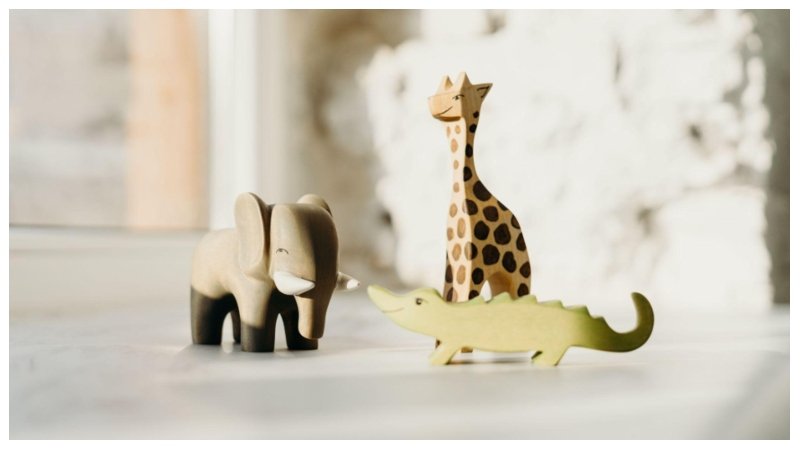
Not many toy categories manage to stay popular for decades, but animal-themed toys have. Handstitched teddy bears, realistic wildlife figurines, and everything in between keep selling year after year. If you’re a retailer deciding what to put on your shelves, it’s worth understanding what keeps this category so steady.
The psychology behind animal-themed play
Children love animals well before they can tell you why. Animals stand in for the whole natural world, and that world pulls at a young child’s curiosity almost automatically. Hand a child a toy lion, and they don’t see molded plastic. They see a character, a story, somewhere to go.
That pull is what makes animal toys such useful tools for play. When children act out scenarios with animals, they start building little narratives, working through problems, and testing out emotions without any real risk. A stuffed dog turns into a best friend. A handful of farm animals becomes a busy village. This kind of open-ended storytelling is what developmental experts often point to as the foundation of good play.
There’s an empathy angle too. Feeding a toy, comforting it, giving it a name—these small acts let children practise the emotional skills they’ll lean on later.
Popular animal-themed toys across generations
The stuffed animal might be the most enduring toy ever made. It hasn’t faded because it answers a need that never really goes away: comfort, company, and something soft to hold onto. Living Nature plush toys are a good example here. Known for their lifelike detail and lovely texture, they show how a classic format can keep evolving without losing what made it work.
Wildlife figurines have their own loyal crowd. A child collecting and sorting animal figures is doing more than lining them up on a shelf. They’re categorizing, comparing, and learning. Plenty of ranges now fold in species facts or habitat details, which quietly adds educational value to the play.
Then there are interactive and electronic animal toys. Some respond to touch and sound; others come as apps that mimic looking after a pet. The technology keeps shifting to match how kids engage with screens, but the emotional hook underneath stays exactly the same.
Developmental benefits worth knowing
Knowing the developmental case for animal toys gives you a stronger, more honest way to position them.
- Cognitive development. Imaginative animal play encourages children to invent scenarios, sequence events, and think through cause and effect. A child telling a story about a family of meerkats is practicing language, logic, and creativity all at once.
- Social skills. When children share a figurine set or build a story together, they’re learning to negotiate, take turns, and cooperate. Those skills travel well beyond the playroom.
- Fine motor skills. Gripping, arranging, and handling toys of different shapes and textures strengthens the hand-eye coordination children need for writing and other precise tasks.
- Emotional regulation. Soft plush toys have a recognized role here. Many children treat a favorite stuffed animal as a transitional object—something that offers security through wobbly moments like starting school or dealing with change.
A category built for long-term stocking
Animal-themed toys aren’t a passing craze that’s waiting to crest and fall away. They’re rooted in how children grow, what they’re curious about, and what helps them feel safe. That mix of emotional resonance and genuine developmental value is what gives them their staying power.
For you, that’s the reassuring part. Stocking animal toys isn’t a gamble on the next fad. It’s a steady bet on products that keep selling because they keep mattering to the people playing with them. When you’re weighing up what to bring in, this is a category you can trust to earn its place.